

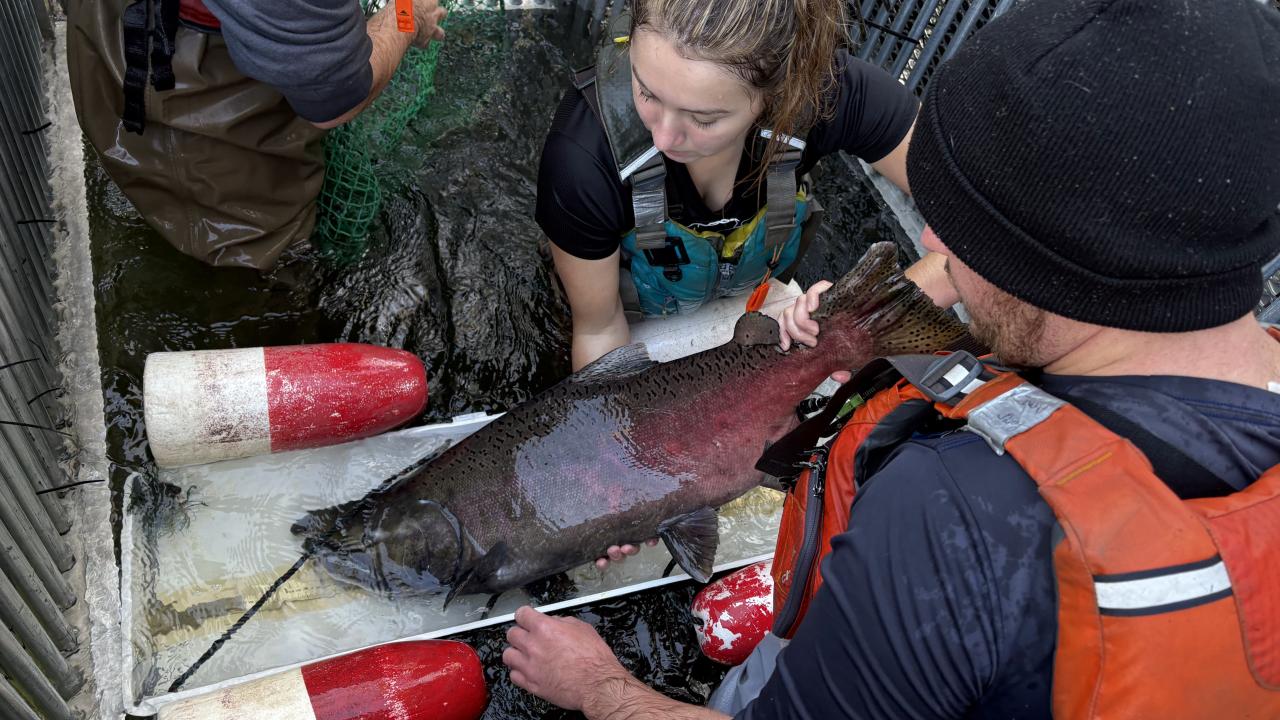
A record-breaking 2,100 Chinook salmon returned to spawn in Putah Creek this fall. Timely water releases, habitat creation and regional collaboration among various public and private organizations are being credited with the successful run.
Putah Creek, which runs along the border of Yolo and Solano Counties near Sacramento has historically supported a small, but vital salmon population. In 2016, scientists estimated that 1,700 salmon returned to the creek.
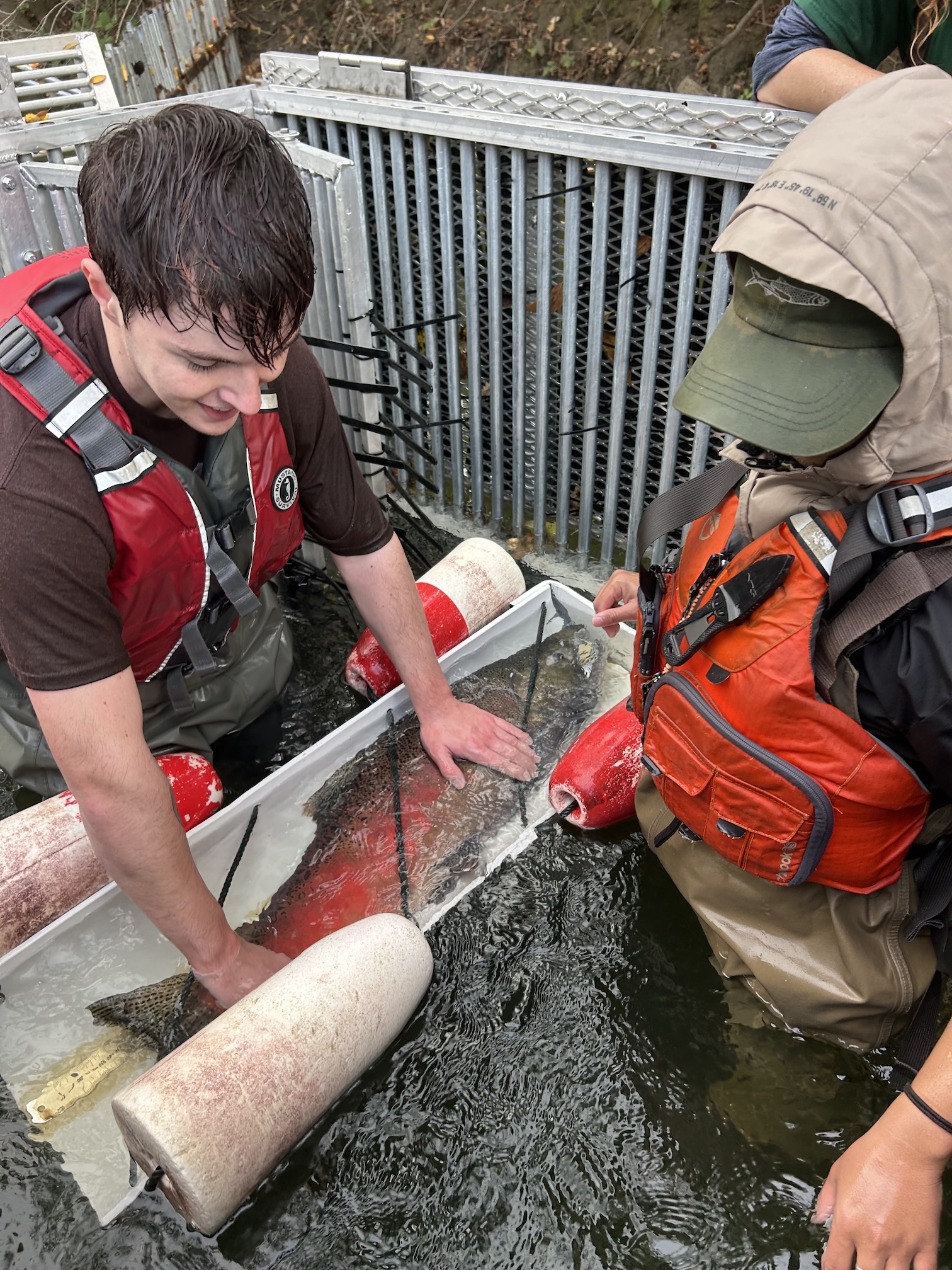
This year's record-breaking number is the result of a precise, individual count conducted by biologists with the University of California, Davis at the Department of Wildlife, Fish and Conservation Biology and the Center for Watershed Sciences. Students, staff and faculty are working together with partners to carefully study and quantify the annual salmon run, as well as to uncover the key environmental conditions required to ensure the run persists year over year.
"The number of adult salmon returning in 2025 is a testament to the collaborative efforts among citizens, water managers, landowners, and scientists who are all working together to create a creek that can support people, fish and wildlife," said Solano County Water Agency (SCWA) General Manager, Chris Lee. “This successful run validates the work done to date and gives us great confidence Putah Creek will continue to support salmon runs for generations to come.”
Key factors on Putah Creek
- 25 years of investment: The success is the culmination of a 25-year, $20 million grant-funded restoration effort. This includes current work on salmon passage in the lower creek, including the Yolo Bypass Wildlife Area, which is funded by the California Department of Fish and Wildlife and Wildlife Conservation Board.
- Collaboration: The long-term commitment and partnership between UC Davis and SCWA to monitor Chinook salmon enabled the existence of long-term data sets to track population changes.
- Adaptive water management and functional flows: SCWA also implemented a test release of extra water this year, timed to mimic natural flows, a technique known as functional flows. This pulse of water appears to have successfully attracted and guided more salmon into the creek.
- Targeted habitat enhancement: In 2025, SCWA placed 500 tons of gravel in the creek, augmenting ongoing spawning gravel rehabilitation efforts. Salmon rely on clean gravel beds to build their nests for spawning.
UC Davis researchers note that wetter conditions and improved habitat conditions, including environmental flows, have also helped the salmon run in 2025. Closure of the commercial salmon fishery for the past three years also plays a factor.
SCWA said the strategies implemented at Putah Creek align with the principles of the Healthy Rivers and Landscapes (HRL) program, a statewide effort supported by the SCWA and dozens of other signatories across the state. The HRL program demonstrates the need to integrate habitat modifications, along with functional flows, to improve conditions for salmon during their critical freshwater life cycle stages.
A future for Putah Creek’s wild salmon
With more than 2,100 adults spawning, the creek is expected to produce millions of eggs and potentially hundreds of thousands of baby salmon next spring.
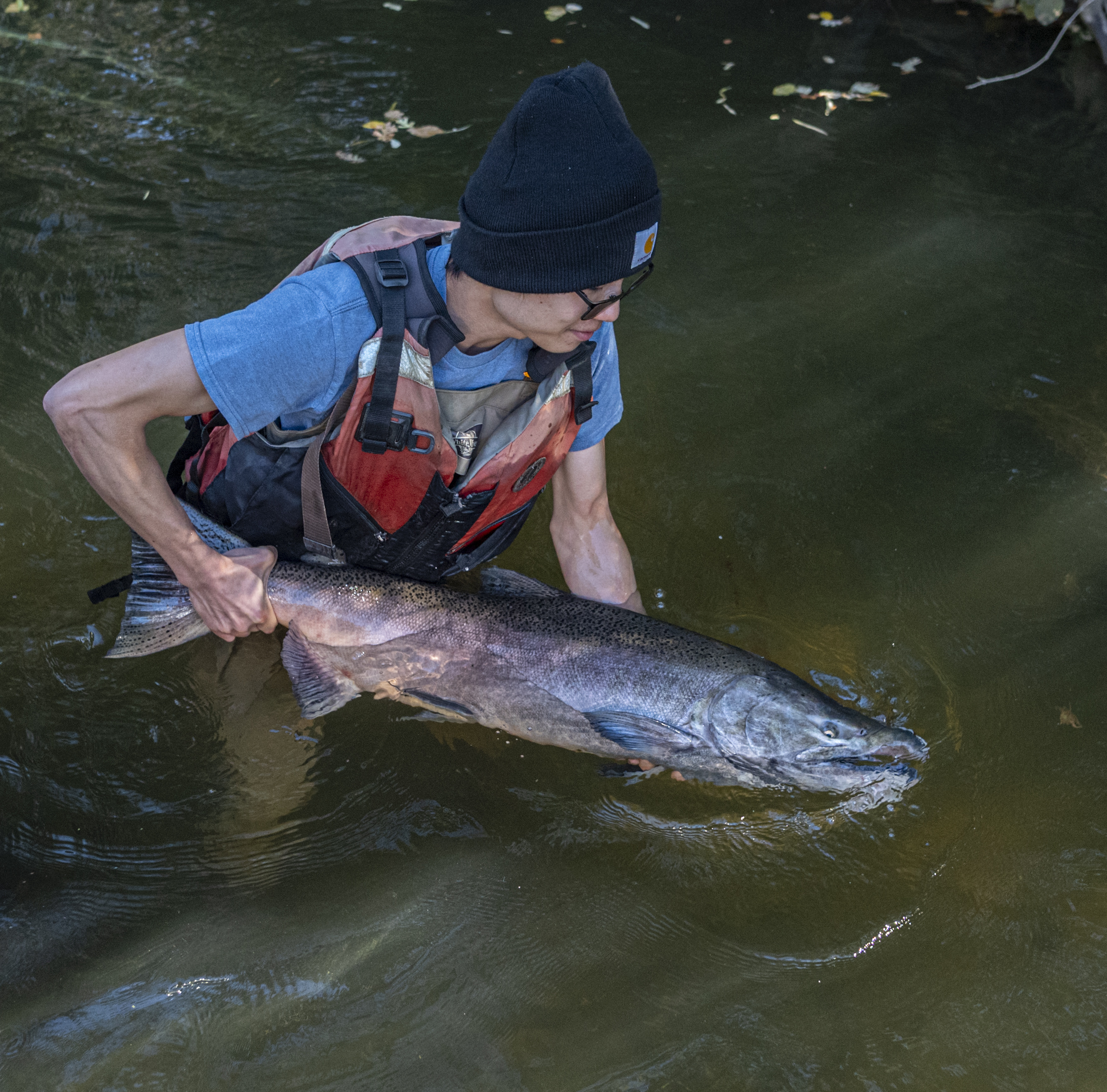
While about 80% of Putah Creek's returning adults currently originate from the Mokelumne River hatchery, the goal is to significantly increase the number of returning adults that originate from Putah Creek instead.
In previous years, about 12% of the returning adults were born directly in Putah Creek. A UC Davis study in March 2025 confirmed Putah Creek-origin salmon for the first time. If a greater percentage of the 2025 progeny survive and return as adults, the run could grow even larger, offering a much-needed boost to California’s overall declining salmon populations.
“The future of salmon in California depends on supporting the entire salmon lifecycle, including spawning areas, food production, protection from predators and availability of water,” said Putah Creek Streamkeeper Max Stevenson. “While much work remains to be done, 2025 is a historic success, marking a pivotal moment in our goals for native chinook salmon.”
This article was adapted from a Dec. 16, 2025 news release from the Solano County Water Agency.
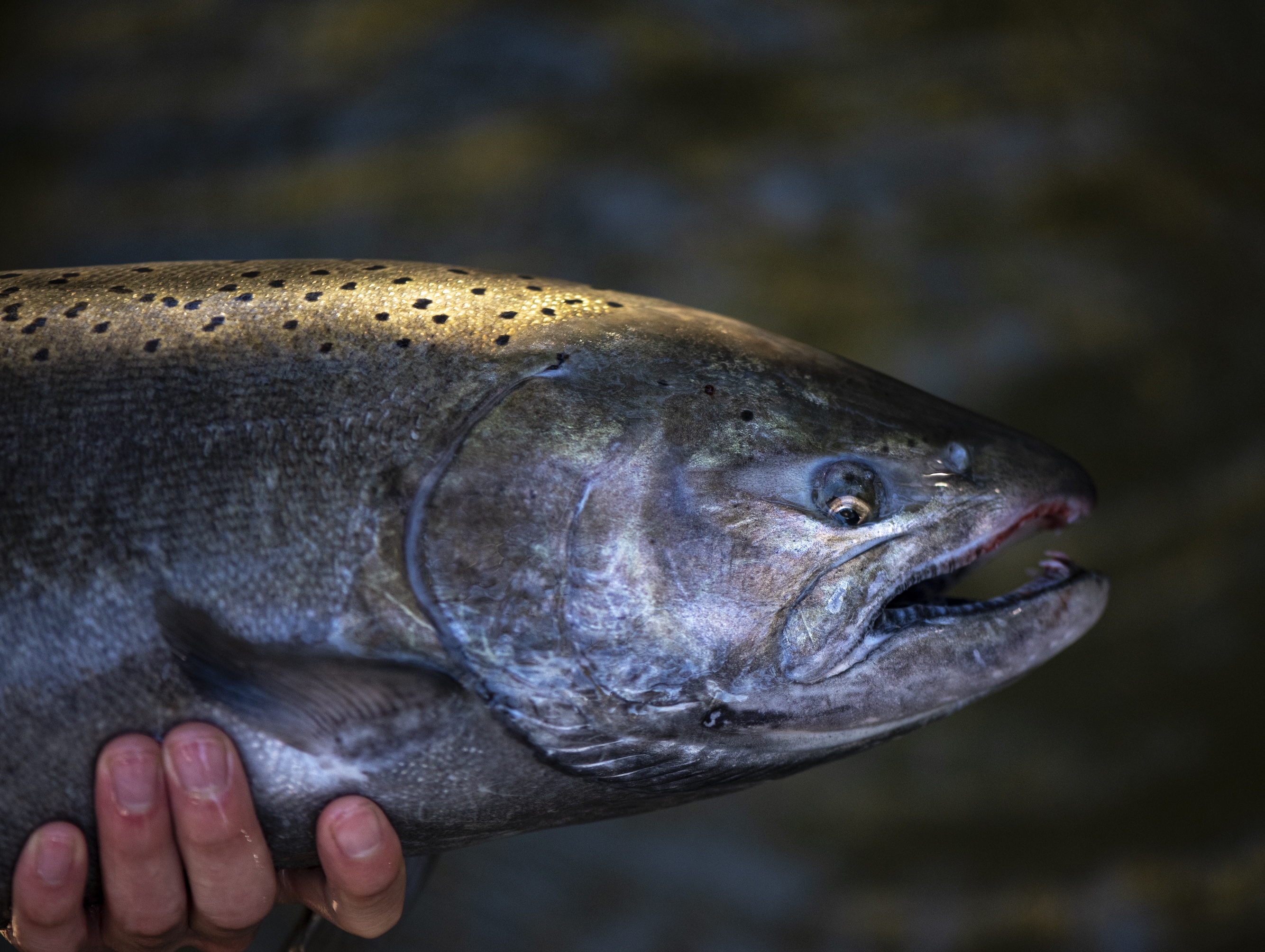
Learn more about UC Davis' work to support salmon
From the Klamath River to Putah Creek and streams and rivers across the state, UC Davis is keeping their eyes, ears, minds and labs open for salmon.
Media Resources
- Max Stevenson, Putah Creek Streamkeeper, mstevenson@scwa2.com
- Kat Kerlin, UC Davis News and Media Relations, 530-750-9195, kekerlin@ucdavis.edu
Press kit: Download photos and video clips of UC Davis students counting, measuring and sampling salmon at Putah Creek.