


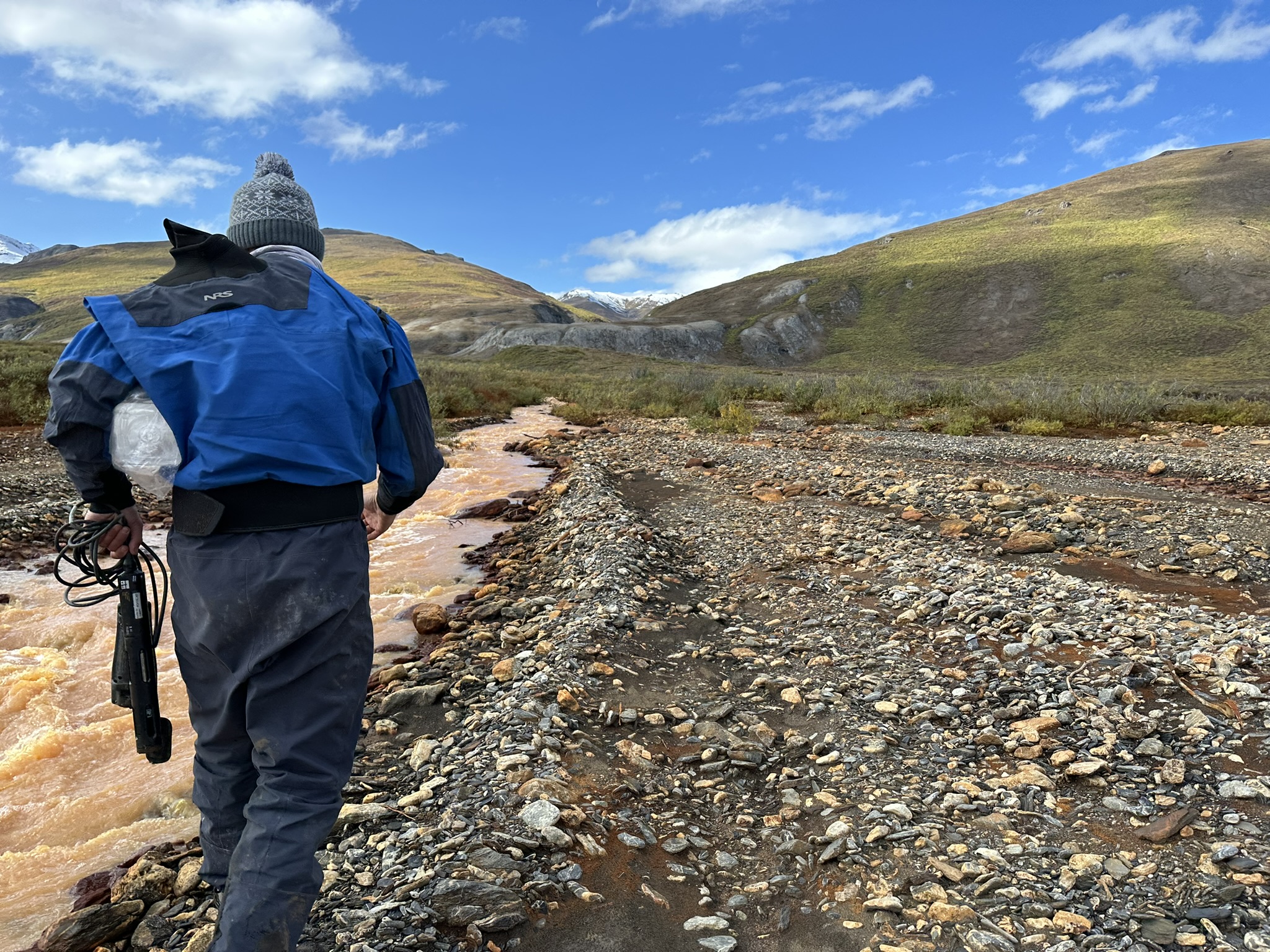
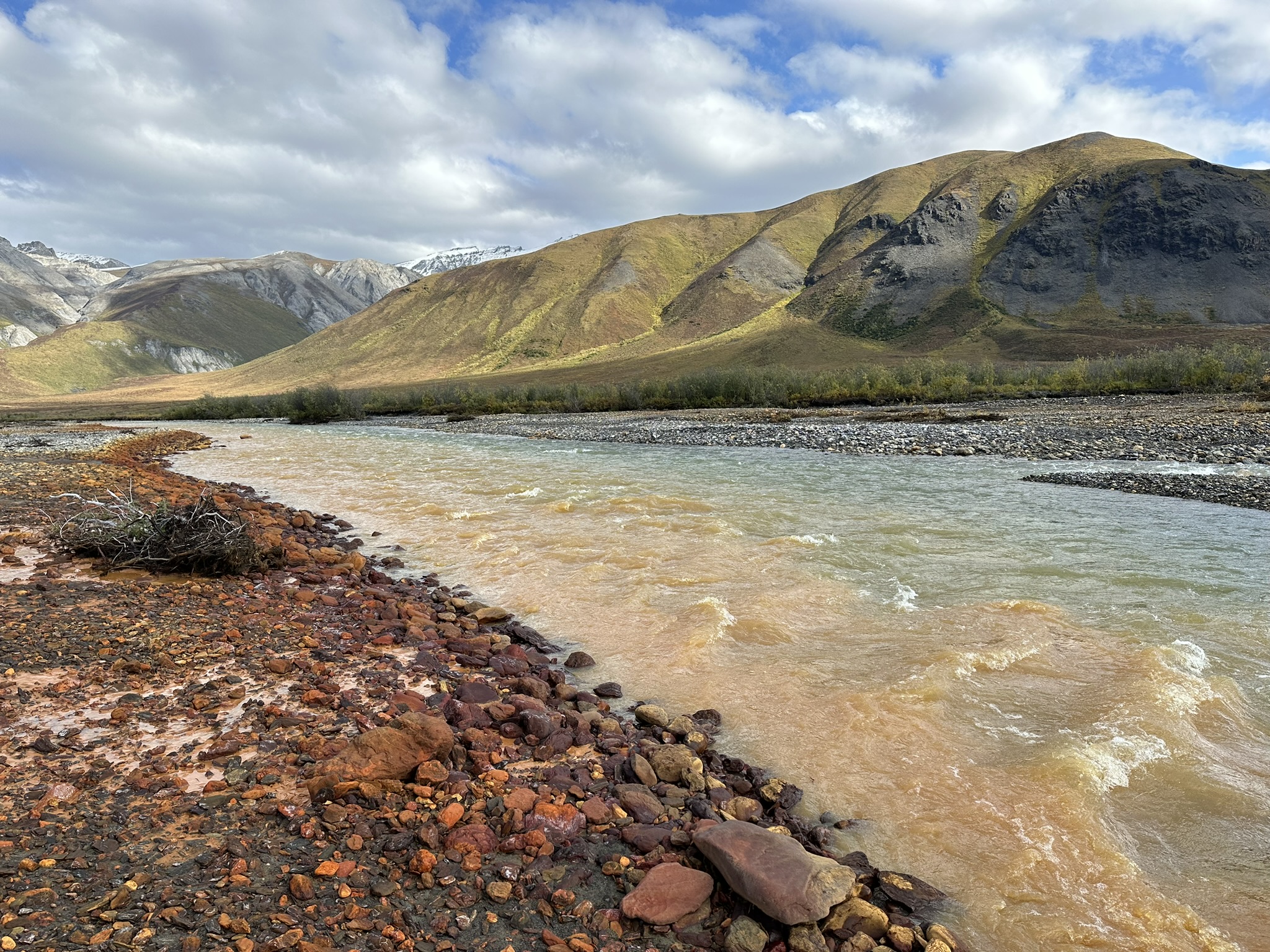
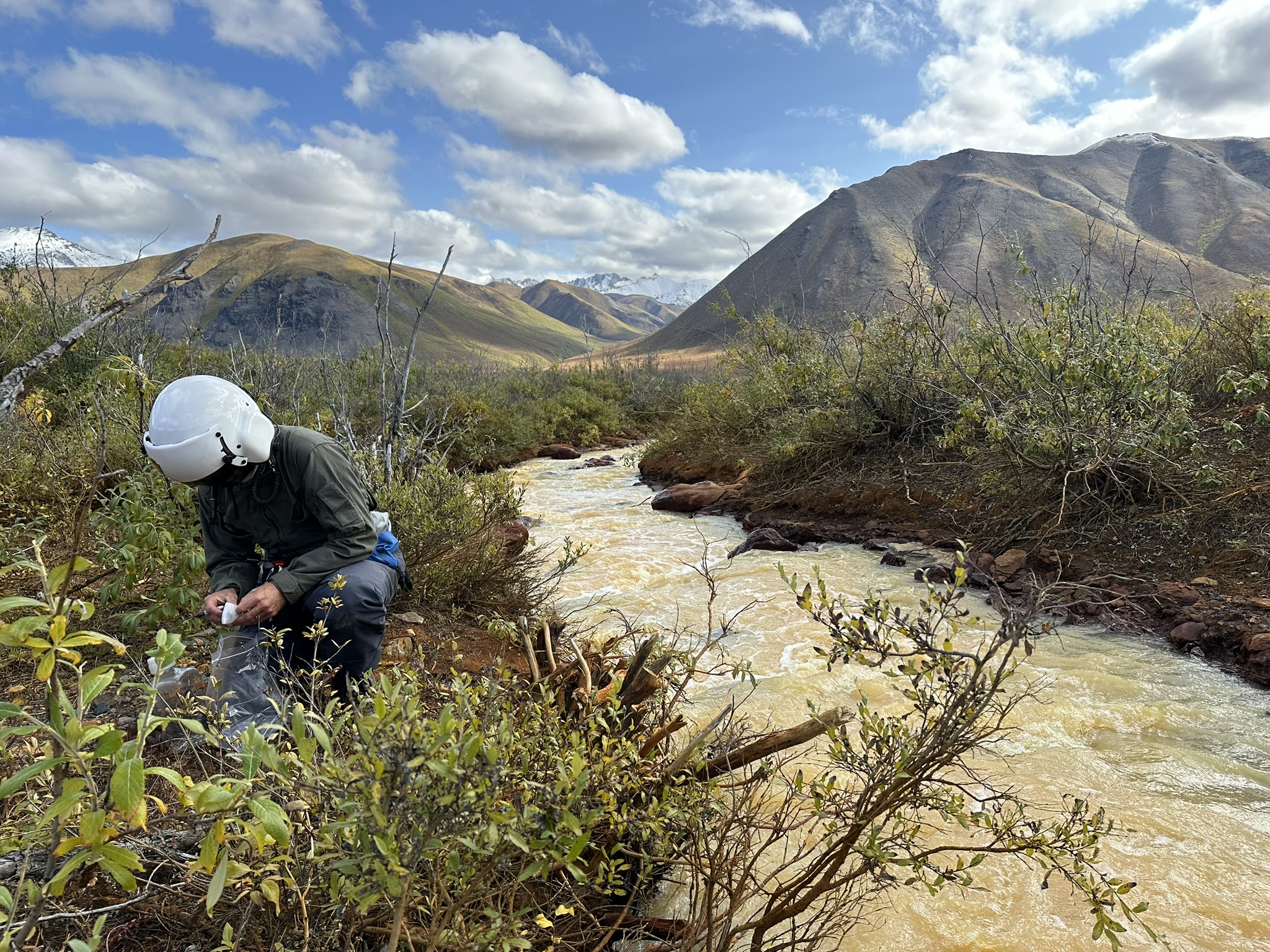
The bright orange plumes of water scientists first noticed billowing across a river in Alaska’s Brooks Range in 2018 were even more acidic and metallic than water leached from metal mines, despite their pristine surroundings. That is according to a new study from the University of California, Davis, of six of the impacted watersheds.
The study, published in the journal AGU Advances, found that these metals can travel far and become more toxic as they go. Metal concentrations were about 70 times higher as much as 60 miles downstream from where they entered the river.
“This is very acidic, metallic water,” said senior author Brett Poulin, a UC Davis professor in the Environmental Toxicology department. “The good news is the river’s mainstem did not become more acidic. It’s buffering the pH, indicating there is some resiliency in this system. But there are metals that increased downstream, and those can be transported very long distances.”
Rusting rivers and thawing permafrost
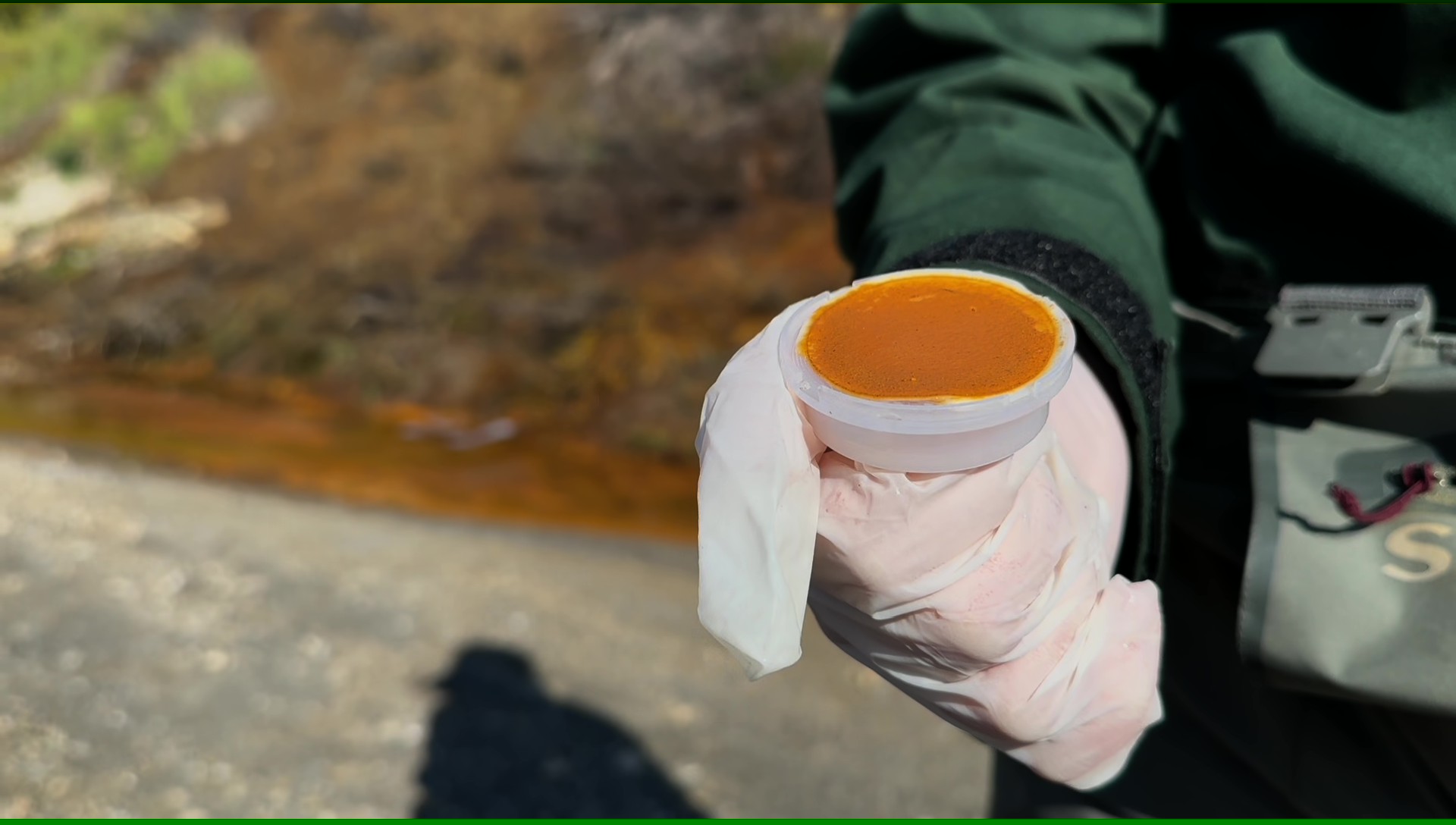
Poulin and colleagues previously attributed the rusty-colored water to thawing permafrost, an increasingly common occurrence as the climate warms. Water trickles into the ground, encountering minerals long trapped in the previously frozen soil. This new interaction releases iron, sulfuric acid and other metals into nearby streams, turning them orange and threatening water quality for plants, wildlife and people.
“This was a process that was not forecast, predicted or included in any assessment of how the Arctic will change under a warmer climate, but we’re seeing it in rivers across the Arctic,” Poulin said. “Since our 2024 paper, ‘rusting rivers’ have been documented in Boreal and Arctic Canada, and other parts of the world that have permafrost.”
Orange rivers coincided with warmest summer
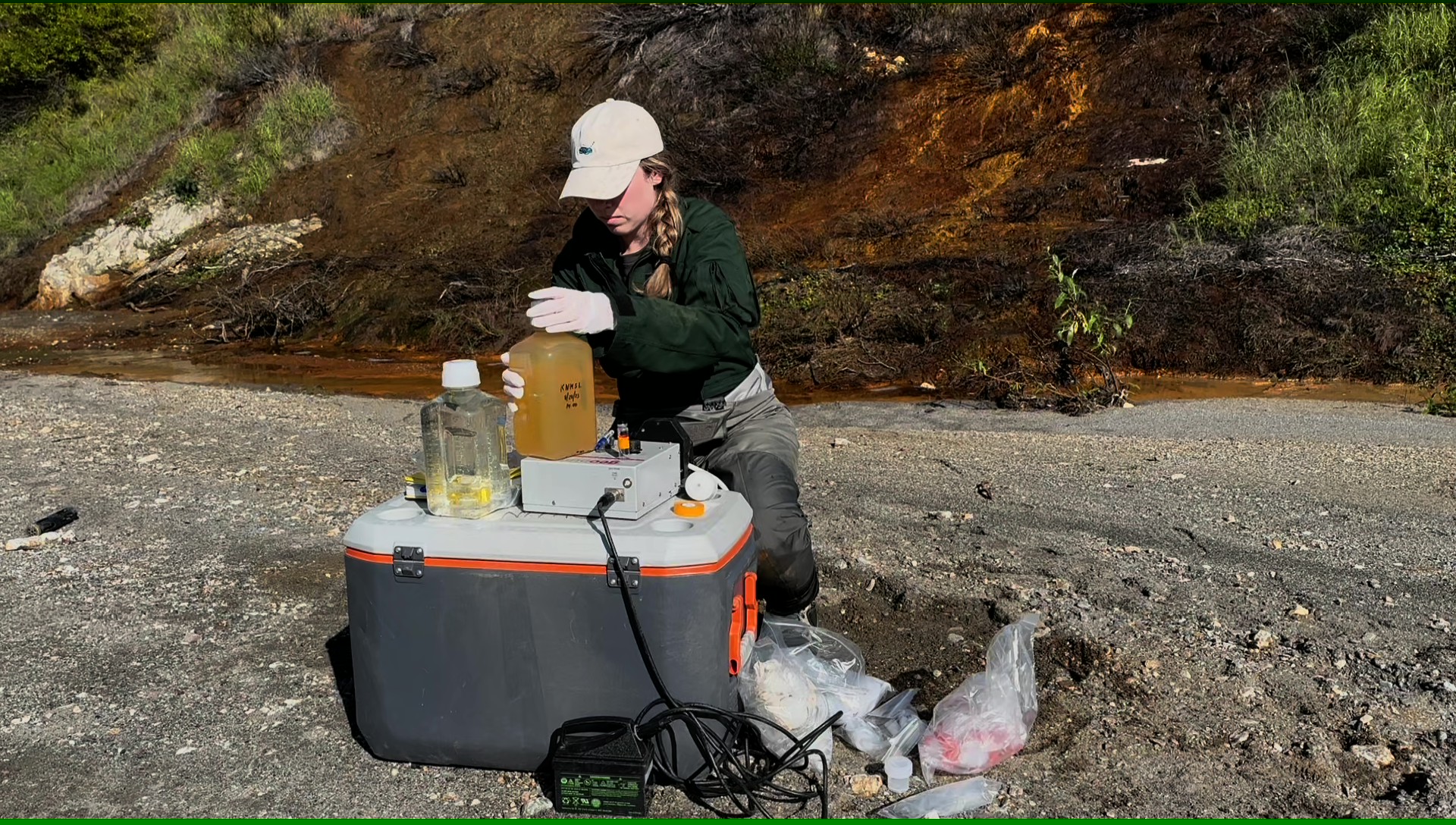
For their new paper, the authors expanded the research to six affected watersheds, all within national parks and preserves in northwest Alaska’s Brooks Range. They spent the summers of 2022 to 2024 collecting water samples from these watersheds’ mainstems, tributaries and hillside seeps to quantify the effects of acid rock drainage on river chemistry.
They used long-term water quality records to trace the event’s onset across the region to 2019 — which coincided with Alaska’s hottest summer to date followed by a snowy winter. The analysis showed abrupt, large spikes in sulfate and zinc concentrations that year followed by a steady decline and recovery phase.
“When you have more snow, it insulates the soil, preventing refreezing,” said first author Taylor Evinger, a Ph.D. candidate in Poulin’s lab at UC Davis. “We think water went deeper into the soil because of soil thaw, interacted with these minerals, and all of these watersheds were triggered around the same time.”
Concerns and hopes
Previous studies have documented more than 200 rivers and streams affected by this phenomenon. There are currently no known adverse impacts to people or wildlife from acid rock drainage to these remote streams, but scientists are conducting additional research to examine the risks more deeply. The authors note that thawing permafrost and subsidence also carry implications for local infrastructure.
“Concerns and hopes are the big takeaways,” Evinger said. “While we are not seeing massive fish die-offs, and we’re not aware of drinking water quality issues currently harming villages, the numbers of observations are still concerning. Many watersheds — hundreds of them — have acid rock drainage inputs. These rivers are pretty much untouched, and yet this is happening here. It’s a new reality of climate change.”
The study’s additional co-authors include Jonathan O’Donnell and Kenneth Hill of the National Park Service (NPS); Michael Carey, Joshua Koch and Carson Baughman of the U.S. Geological Survey (USGS); and Rebecca Frei of UC Davis.
The study was funded by the USGS, NPS, National Science Foundation and the UC Davis Matsumura Fellowship.
From Labs to Lives
This work was supported by federal research funding, which helps transform promising discoveries into real-world breakthroughs that save lives and improve quality of life.
Learn more about how public investment in UC Davis research powers innovation, strengthens the economy and advances human health in From Labs to Lives.
Media Resources
Press kit of images. Download permitted with credit listed in file.
Media Contacts:
- Brett Poulin, UC Davis Environmental Toxicology, bapoulin@ucdavis.edu
- Taylor Evinger, UC Davis Environmental Toxicology, tevinger@ucdavis.edu
- Kat Kerlin, UC Davis News and Media Relations, 530-750-9195, kekerlin@ucdavis.edu